In 2026, the music industry is louder, faster, and more crowded than ever before. Over 100,000 tracks are uploaded to streaming platforms every single day. That means even the most talented artist can disappear into the noise without a solid music marketing strategy. Here’s the truth that separates artists who break through from those who stay invisible: talent alone has never been enough. The artists dominating playlists, selling out shows, and building devoted fanbases are the ones who treat their music career like a business, and marketing is the engine that drives that business forward.
Whether working as an independent artist hustling from a bedroom studio or signed to a label seeking more creative control over promotion, this guide delivers a complete, actionable roadmap. Every tactic here is designed to help musicians cut through the noise, connect with real fans, and turn streams into sustainable income.
Key Takeaways 🎯
- A music marketing strategy is not optional in 2026 – it’s the difference between being heard and being buried under 100,000 daily uploads.
- Community beats algorithms. Building superfans through direct engagement, rewards programs, and exclusive content generates more lasting growth than chasing viral moments.
- Data-driven decisions win. Use Spotify for Artists analytics, social media insights, and audience demographics to guide every marketing move.
- Diversify beyond streaming. Direct-to-consumer channels, SMS marketing, email lists, and merch sales create revenue streams that artists actually own.
- AI and emerging tech are tools, not threats. Artists who embrace AI-assisted workflows, spatial audio, and smart content strategies will have a massive competitive edge.
The 2026 Music Landscape: Why Every Artist Needs a Music Marketing Strategy
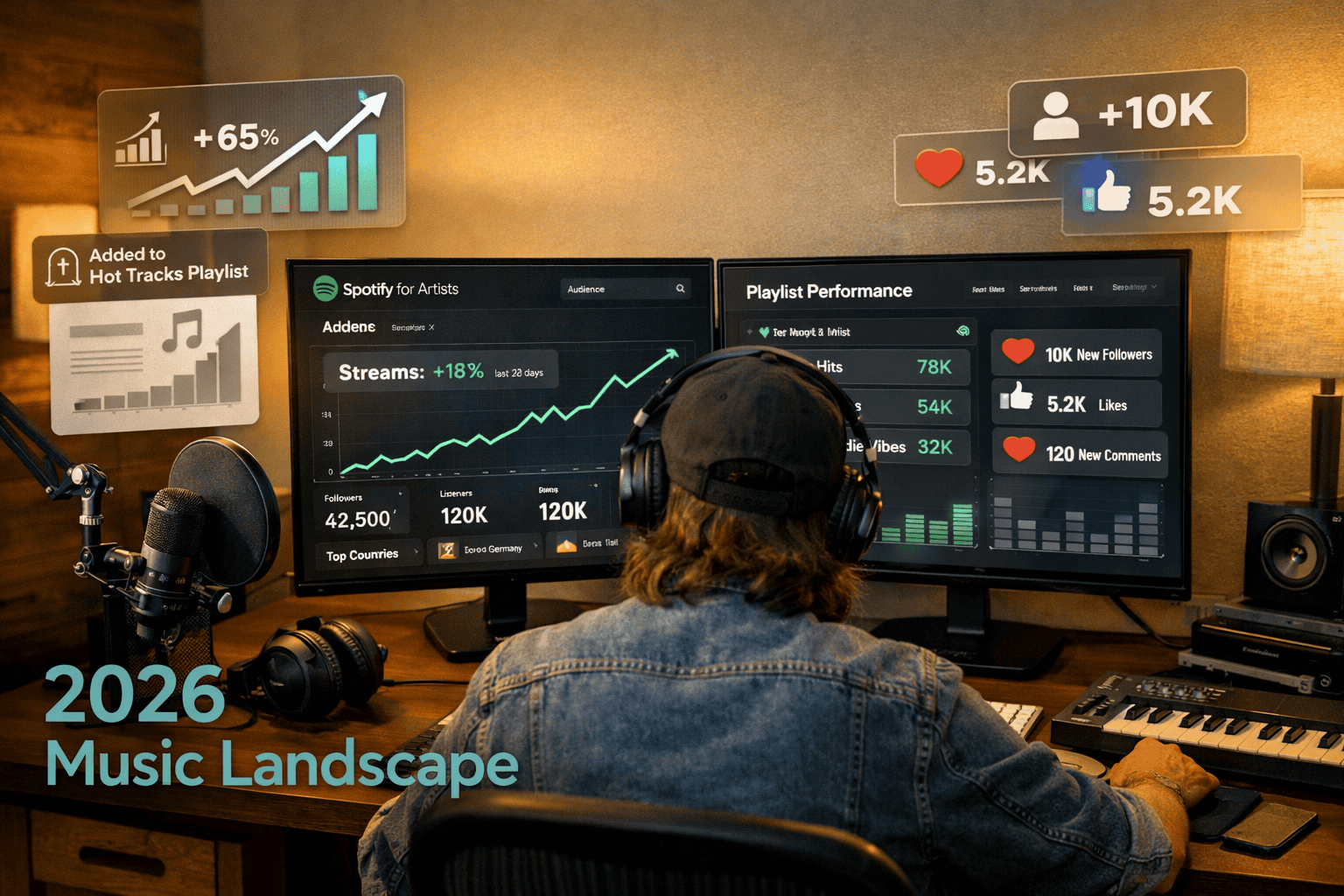
The music industry in 2026 looks radically different from even two years ago. Understanding these shifts is essential before building any promotional plan.
Streaming Is Bigger and More Competitive Than Ever
Spotify announced that its payouts topped $11 billion in 2025, a record-breaking figure. Head of Music Charlie Hellman revealed major 2026 initiatives focused on enhanced tools for artist promotion and discovery. Meanwhile, Audiomack surpassed 50 million monthly active users with 31% year-over-year growth, launching its new Artist Pro toolkit specifically designed for independent music discovery and marketing.
These numbers tell a clear story: there’s more money flowing through streaming than ever, but the competition for listener attention is fierce.
The Rise of the Superfan Economy
The old model, cast a wide net and hope for millions of casual listeners, is fading. In 2026, the smartest artists focus on building deep relationships with fewer, more dedicated fans. Industry forecasters emphasize a shift toward shared values and identities, where fan advocacy matters more than algorithmic playlist placements.
💡 “The future belongs to artists who build communities, not just audiences.” – A principle echoed across every major music industry report in 2026.
AI Is Reshaping Everything
According to iMusician’s State of the Music Industry 2026 report, AI in production, lossless and spatial audio growth, ethical concerns around AI-generated content, and even a physical media comeback amid streaming fatigue are all defining trends. AI isn’t replacing artists, it’s becoming a creative and administrative sidekick that handles the tedious work so musicians can focus on what matters.
For a deeper dive into the broader landscape of music promotion, explore Music Supremacy’s complete resource hub.
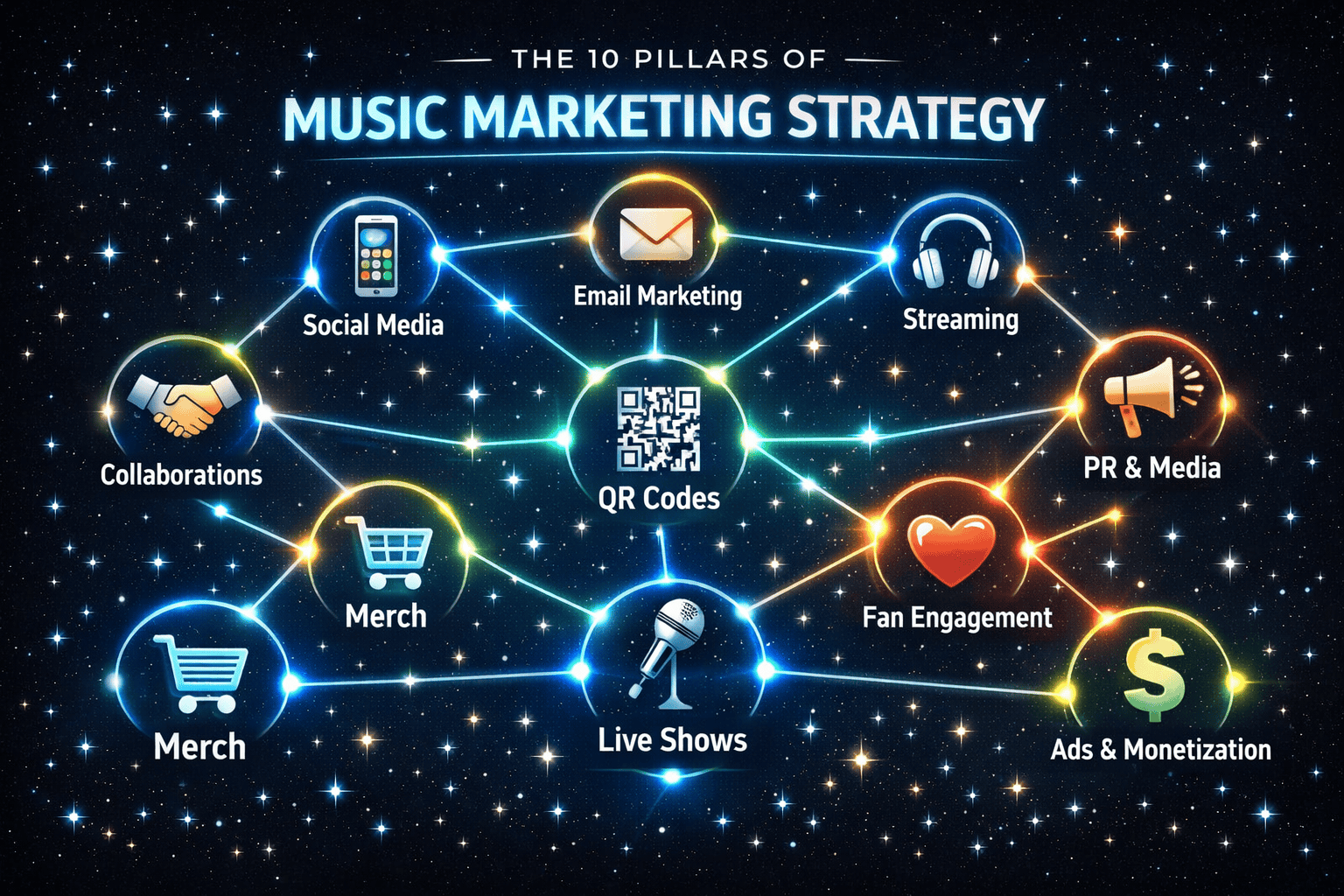
15 Essential Pillars of a Winning Music Marketing Strategy
1. Define Your Brand Identity Before Anything Else 🎨
Before spending a single dollar on ads or posting a single Reel, every artist needs crystal-clear answers to these questions:
| Question | Why It Matters |
|---|---|
| Who is the target listener? | Marketing to “everyone” means reaching no one. |
| What emotions does the music evoke? | This shapes visual branding, content tone, and messaging. |
| What makes this artist different? | A unique selling proposition cuts through the noise. |
| What’s the artist’s story? | Storytelling creates emotional connection and memorability. |
Action step: Write a one-paragraph artist bio that captures the unique story, sound, and visual identity. Use this as the foundation for every piece of marketing content.
2. Master Spotify for Artists and Streaming Analytics 📊
Data is the backbone of any effective music marketing strategy in 2026. Spotify for Artists provides a goldmine of information:
- Geographic data – Discover which cities have the most listeners and plan tours or targeted ads accordingly.
- Demographic breakdowns – Know the age, gender, and listening habits of the audience.
- Playlist performance – Track which playlists drive the most streams and saves.
- Real-time streaming data – Monitor release performance hour by hour.
Experts recommend using these analytics to identify the top 5 cities where an artist has the most listeners, then running geo-targeted social media ads in those locations. This approach delivers far better ROI than blanket national campaigns.
For independent artists looking to grow their streaming numbers authentically, check out this guide on organic Spotify promotion for independent artists.
3. Build a Social Media Presence That Actually Converts 📱
Here’s a controversial truth that’s gaining traction in 2026: social media isn’t non-negotiable. Alternatives like paid ads, email lists, and direct-to-consumer platforms can offer more reliable traffic without the exhausting hamster wheel of daily organic posting.
That said, for most artists, social media remains the most accessible and powerful tool available. The key is doing it strategically rather than posting everywhere and hoping something sticks.
The platforms that matter most in 2026:
- TikTok – Still the #1 discovery platform for music, despite ongoing regulatory uncertainty. Learn about what musicians should do if TikTok faces restrictions.
- Instagram Reels – A powerhouse for visual storytelling and fan engagement. Discover how Reels can turn Instagram into a music magnet.
- YouTube Shorts – Growing rapidly as a music discovery tool, especially with YouTube Music’s integration of comment sections that turn streaming into conversation spaces.
Liam James Ward, CEO of Something Something (named Agency of the Year at the 2025 Music Marketing Awards), identifies several 2026 content trends artists should embrace:
- Post-authenticity content – Audiences are tired of overly polished “authentic” content. Raw, unfiltered, even messy content performs better.
- Clipping for short-form video – Repurposing longer content (studio sessions, live performances, interviews) into bite-sized clips.
- Fan accounts – Encouraging and empowering fans to create content about the artist.
- Constellations of content – Creating interconnected content pieces that form a larger narrative, giving fans multiple entry points.
For a comprehensive breakdown, explore these 5 social media marketing hacks to elevate music careers.
4. Launch Pre-Save Campaigns for Every Release 🚀
Chasing virality is a gamble. Pre-save campaigns are a sure bet. They signal to streaming algorithms that a release has anticipation behind it, which directly impacts first-week playlist placements.
How to run an effective pre-save campaign:
- Create a landing page with a pre-save link at least 3-4 weeks before release.
- Offer an incentive – exclusive content, early access to a music video, or entry into a giveaway.
- Promote the pre-save link across every channel: social media, email, SMS, and live shows.
- Send reminder messages in the final 48 hours before release.
- Follow up after release with a thank-you message and a call to action (add to playlist, share with a friend).
5. Embrace Direct-to-Consumer (D2C) Channels 💰
One of the most significant shifts in 2026 is the move toward D2C channels for merch, memberships, and exclusive content. Industry forecasters highlight this as a critical revenue strategy because it puts artists in direct control of their income.
D2C opportunities include:
- Merch stores on personal websites (not just through streaming platforms)
- Membership/subscription tiers offering exclusive tracks, behind-the-scenes content, or early ticket access
- Limited-edition physical media – vinyl, cassettes, and even CDs are making a comeback amid streaming fatigue
- Digital collectibles and exclusive downloads
Artists who build rewards programs for loyal listeners create a flywheel effect: fans feel valued, they engage more, they spend more, and they recruit new fans through word of mouth.
6. Build and Nurture an Email List ✉️
Social media platforms can change their algorithms overnight. A TikTok ban could wipe out an entire audience. But an email list is owned media, no algorithm can take it away.
Email marketing best practices for musicians:
| Do This | Avoid This |
|---|---|
| Segment the list (superfans vs. casual listeners) | Sending the same generic email to everyone |
| Include exclusive content in every email | Only emailing when selling something |
| Keep subject lines short and intriguing | Writing novels in the email body |
| Send consistently (bi-weekly or monthly) | Emailing once a year then spamming during release week |
| Include clear calls to action | Forgetting to link to the music |
7. Use SMS Marketing for Instant Fan Connection 📲
Email open rates hover around 20-25%. SMS open rates exceed 90%. That’s why text message marketing is becoming one of the most powerful tools in a modern music marketing strategy.
Artists can use SMS to:
- Announce surprise drops
- Share exclusive links before public release
- Send personalized messages to top fans
- Promote merch sales and ticket availability
- Run flash contests and giveaways
Learn how to implement this powerful channel with this guide on text message marketing for musicians.
8. Collaborate Strategically 🤝
Collaborations remain one of the fastest ways to reach new audiences. But in 2026, the approach is more sophisticated than simply jumping on a feature.
Types of strategic collaborations:
- Co-headlining shows or tours– Split costs, double the audience.
- Remix exchanges – Each artist remixes the other’s track, exposing both fanbases to new music.
- Playlist swaps– Curate playlists featuring each other’s music alongside complementary artists.
- Content collaborations – Joint Instagram Lives, TikTok duets, or YouTube sessions.
- Podcaster partnerships– One of the top 2026 trends is collaborating with podcasters who share a similar audience demographic.
The key is choosing collaborators whose audience overlaps with, but isn’t identical to, the target listener. An indie folk artist collaborating with a spoken word poet, for example, reaches a new but compatible audience.
9. Invest in Paid Advertising (After Organic Validation) 💸
Here’s a critical principle that many artists get wrong: paid ads should amplify what’s already working, not replace organic effort.
Data-backed strategies recommend running paid campaigns only after identifying content or songs that have shown organic traction. If a particular Reel is getting strong engagement or a specific track is gaining saves, that’s the content to put ad dollars behind.
Paid ad platforms ranked by effectiveness for musicians in 2026:
- Meta Ads (Instagram/Facebook) – Best for targeting specific demographics and interests.
- TikTok Ads – Best for reaching younger audiences and driving music discovery.
- YouTube Ads – Best for promoting music videos and longer-form content.
- Spotify Ad Studio – Best for reaching listeners directly within the streaming environment.
- Google Ads – Best for capturing search intent (people actively looking for new music in a genre).
10. Leverage Playlist Pitching (But Don’t Depend on It)🎶
Getting placed on a major Spotify editorial playlist can generate hundreds of thousands of streams overnight. But building an entire strategy around playlist pitching is risky because it creates curator dependency.
A more sustainable approach combines playlist pitching with:
- SEO optimization – Using keywords in track titles, descriptions, and artist bios so music appears in search results.
- Collaborative playlist networks – Building relationships with other artists and curators in the same niche.
- Algorithmic triggers – Focusing on save rates, repeat listens, and playlist adds from real fans, which signal algorithms to recommend the music more broadly.
🎵 Pro tip: Pitch to Spotify editorial playlists at least 7 days before release through Spotify for Artists. Include a compelling story about the song’s inspiration.
Content Strategy: The Engine Behind Every Music Marketing Strategy
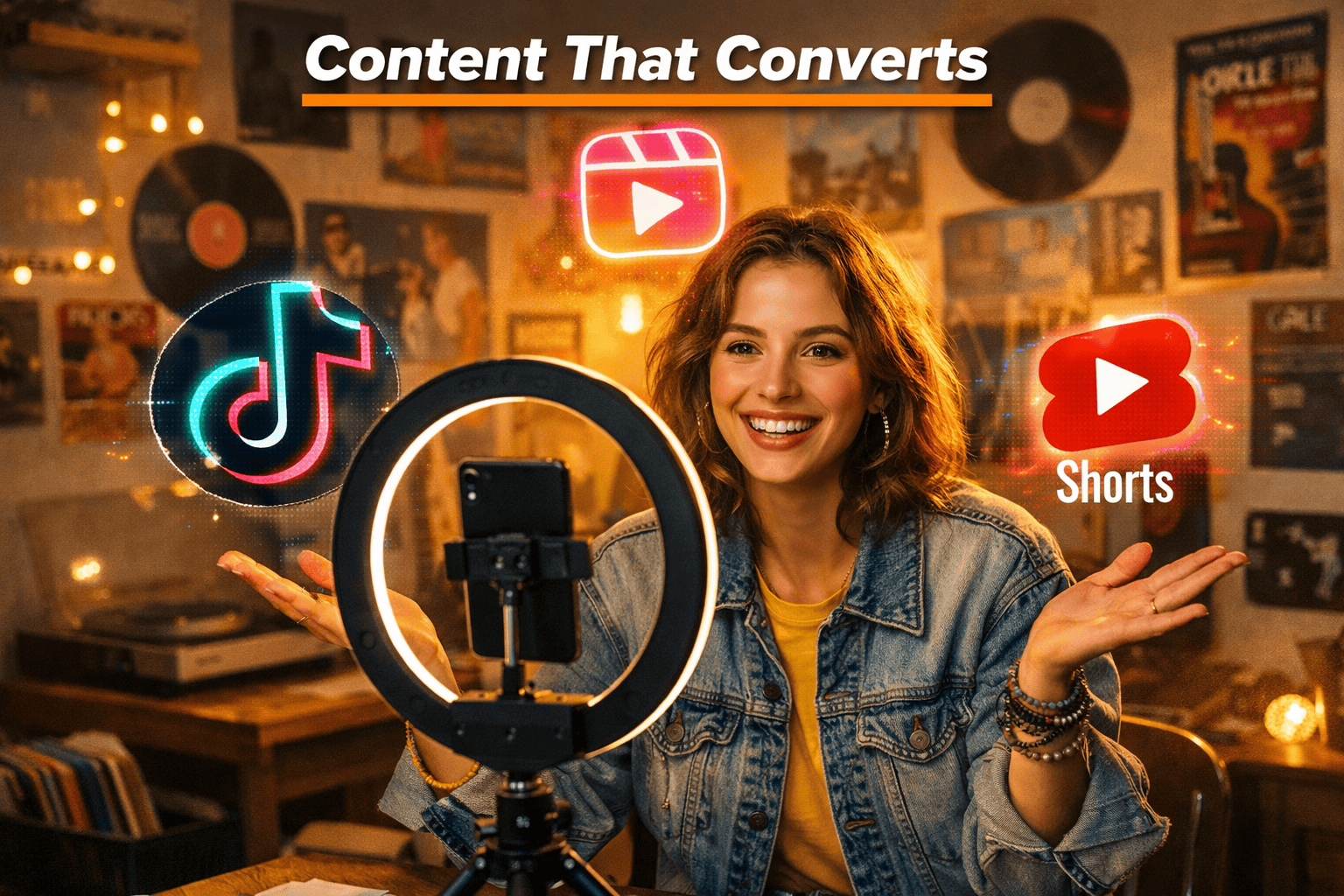
Content is the fuel that powers every other tactic on this list. Without a consistent, strategic content plan, even the best music gets lost.
The Content Constellation Framework
Liam James Ward’s “constellations of content” concept is one of the most important ideas for artists to understand in 2026. Instead of creating isolated, one-off posts, artists should build interconnected content ecosystems around each release.
Example content constellation for a single release:
<code>                    🎵 THE SINGLE
                   /    |
          Studio BTS  Lyric    Music
          Videos     Breakdown  Video
         /            |       /
    Raw clips  Producer  Fan    Behind   Dance
    for Reels  interview reactions scenes  challenge
</code>
Each piece of content links back to the central release while offering fans different entry points based on their interests and preferred platforms.
Short-Form Video: The Non-Negotiable Format
In 2026, short-form video (15-60 seconds) remains the dominant content format for music discovery. The trend of “clipping”, taking longer content and cutting it into compelling short-form pieces, means artists can create dozens of posts from a single studio session or live performance.
High-performing short-form content types:
- 🎤 Song snippets with compelling visual hooks in the first 0.5 seconds
- 🎹 Process videos showing how a beat or melody was created
- 😂 Relatable musician humor tied to the artist’s niche
- 🗣️ Story time content explaining the meaning behind lyrics
- 🎸 Live performance clips that showcase raw energy and talent
Niche Authenticity Over Broad Appeal
Traditional broad-appeal content is increasingly ineffective for music conversion. Experts advocate for direct music promotion and niche authenticity to build superfans, rather than creating generalist content that attracts followers who never actually listen to the music.
An artist making dark ambient electronic music, for example, should lean into that niche rather than trying to create mainstream-friendly content. The audience will be smaller but infinitely more engaged and likely to stream, buy merch, and attend shows.
Future-Proofing: Advanced Music Marketing Strategy Tactics for 2026 and Beyond
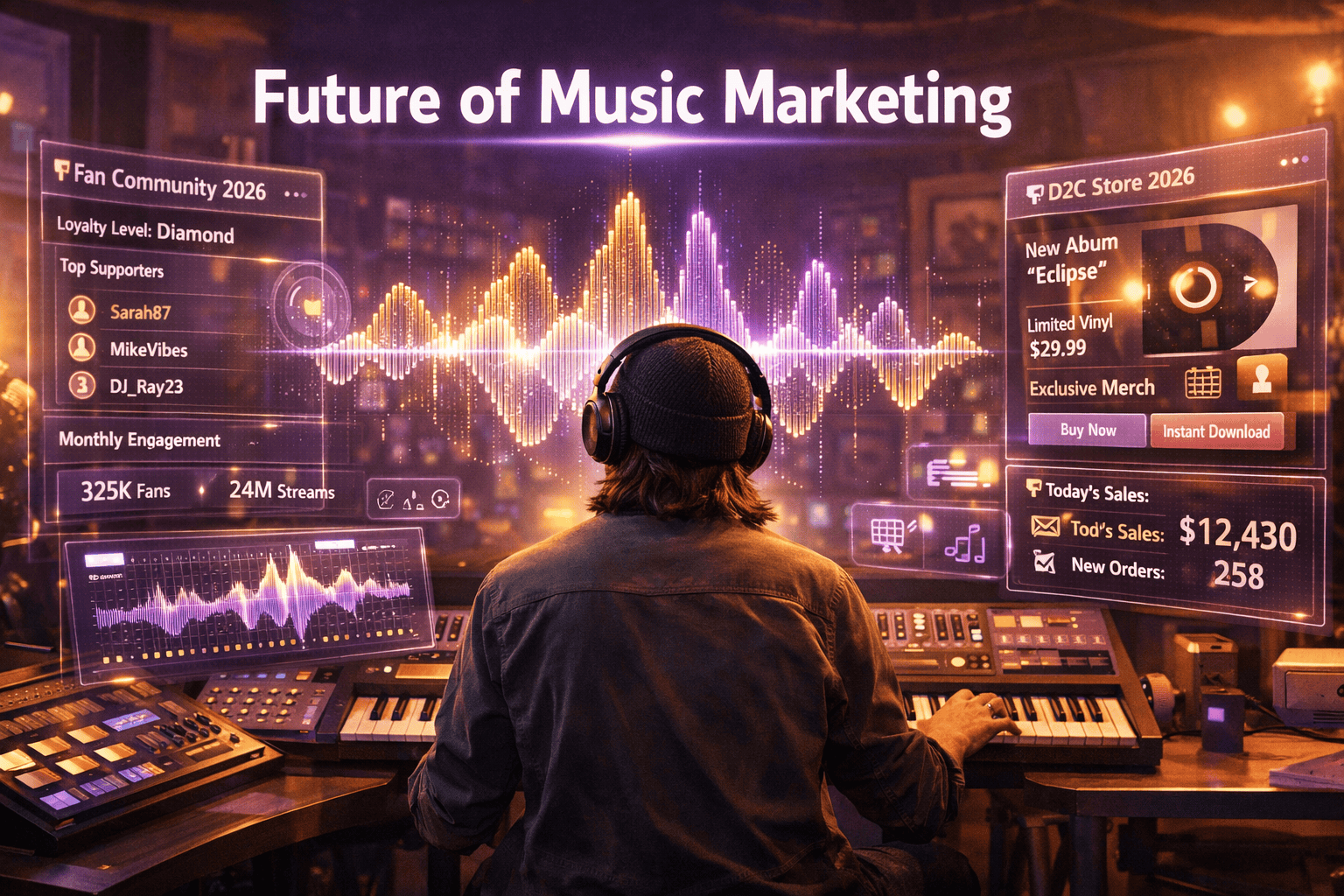
AI as a Creative and Marketing Sidekick 🤖
AI tools in 2026 are transforming how artists handle the business side of music:
- AI-powered analytics that predict which songs will perform best as singles
- Automated social media scheduling with AI-generated caption suggestions
- AI-assisted music production tools like Suno that help artists prototype ideas quickly (learn more about music prompts for Suno)
- Chatbots for fan engagement that handle common questions and direct fans to new releases
- AI-driven ad optimization that automatically adjusts targeting based on performance data
The ethical conversation around AI in music is ongoing, but the consensus among forward-thinking artists is clear: use AI as a tool to handle administrative and repetitive tasks, freeing up creative energy for the music itself.
Spatial Audio and Immersive Experiences 🎧
With the growth of lossless and spatial audio formats (Dolby Atmos, Sony 360 Reality Audio), artists who release music in immersive formats gain a competitive edge. Streaming platforms increasingly prioritize spatial audio content in their recommendations, and listeners with compatible headphones actively seek it out.
Context-Aware Advertising
Universal Production Music highlighted a fascinating 2026 trend: dynamic, context-aware ads on platforms like Spotify and Netflix. These ads adapt their music and messaging based on the listener’s current context, time of day, mood, activity, and listening history.
For artists, this means thinking about when and where fans encounter music, not just what they hear. A chill lo-fi track might be promoted during evening wind-down playlists, while an upbeat anthem targets workout playlists.
QR Code Marketing for Physical-Digital Bridge
As physical media makes a comeback, QR codes create a bridge between the physical and digital worlds. Artists can place QR codes on:
- Vinyl sleeves linking to bonus digital content
- Concert posters linking to ticket purchases
- Merch linking to exclusive playlists or unreleased tracks
- Business cards linking to a complete discography
The Fan Advocacy Model
Perhaps the most important long-term shift in 2026 is the move from algorithmic dependence to fan advocacy. Instead of optimizing solely for Spotify’s algorithm or TikTok’s For You Page, artists are investing in turning casual listeners into active advocates who:
- Share music with friends organically
- Create fan content (covers, reaction videos, fan art)
- Defend and promote the artist in online communities
- Attend multiple shows and buy merch repeatedly
This model is more sustainable because it doesn’t rely on any single platform’s algorithm. Even if every social media platform disappeared tomorrow, an artist with a devoted fan community would survive.
Building Your 90-Day Music Marketing Strategy Action Plan
Theory is worthless without execution. Here’s a practical 90-day plan that any artist can start implementing today:
Month 1: Foundation (Days 1-30) 🏗️
- Define brand identity (visual aesthetic, story, target listener)
- Set up or optimize Spotify for Artists, Apple Music for Artists, and Audiomack profiles
- Build a simple website with an email signup form
- Create accounts on 2-3 social media platforms (don’t spread too thin)
- Develop a content calendar for the next 30 days
- Start building an email list with a lead magnet (free unreleased track, behind-the-scenes video)
Month 2: Growth (Days 31-60) 📈
- Launch a pre-save campaign for the next release
- Begin posting short-form content 4-5 times per week
- Reach out to 10 potential collaborators
- Pitch to 5 niche playlist curators
- Send the first email newsletter
- Analyze streaming and social media data to identify what’s working
Month 3: Amplification (Days 61-90) 🔊
- Put $50-100 behind the best-performing organic content as paid ads
- Launch an SMS list for superfans
- Organize a fan engagement event (virtual listening party, Q&A, contest)
- Explore D2C merch opportunities
- Review all data and refine the strategy for the next quarter
- Set up a referral or rewards program to incentivize fan advocacy
Common Music Marketing Mistakes to Avoid ⚠️
Even with the best intentions, artists frequently sabotage their own marketing efforts. Here are the most common pitfalls:
❌ Mistake 1: Chasing virality instead of building community. A viral moment brings temporary attention. A community brings lifelong fans. Focus on the latter.
❌ Mistake 2: Marketing to everyone. Niche down. An artist who tries to appeal to all music listeners appeals to none of them.
❌ Mistake 3: Only promoting during release week. Marketing is a 365-day-a-year activity. The artists who stay visible between releases are the ones who grow consistently.
❌ Mistake 4: Ignoring data. Gut feelings are great for songwriting. They’re terrible for marketing decisions. Let the numbers guide the strategy.
❌ Mistake 5: Putting all eggs in one platform’s basket. Platforms rise and fall. Diversify across owned media (email, SMS, website) and multiple social platforms.
❌ Mistake 6: Buying fake streams or followers. Bots destroy algorithmic credibility. Platforms are increasingly sophisticated at detecting artificial engagement, and the penalties are severe, including removal from playlists and even platform bans.
Conclusion: Your Music Marketing Strategy Starts Now
The music industry in 2026 rewards artists who are strategic, consistent, and authentic. The tools available today, from Spotify‘s enhanced artist tools to AI-powered workflows, from SMS marketing to spatial audio, give independent musicians more power than ever before to build sustainable careers on their own terms.
But none of these tools matter without action. Here are the three most important next steps to take today:
- Audit the current situation. Look at streaming analytics, social media performance, and existing fan touchpoints. Identify the biggest gaps.
- Pick three tactics from this guide that align with current resources and goals. Don’t try to do everything at once, focus beats volume every time.
- Commit to consistency. The artists who win aren’t the ones with the biggest budgets. They’re the ones who show up every day, learn from the data, and keep refining their approach.
The music is the foundation. The music marketing strategy is the megaphone that makes sure the world actually hears it. Start building that megaphone today, the fans are out there waiting.
🎶 Now go make some noise. 🎶